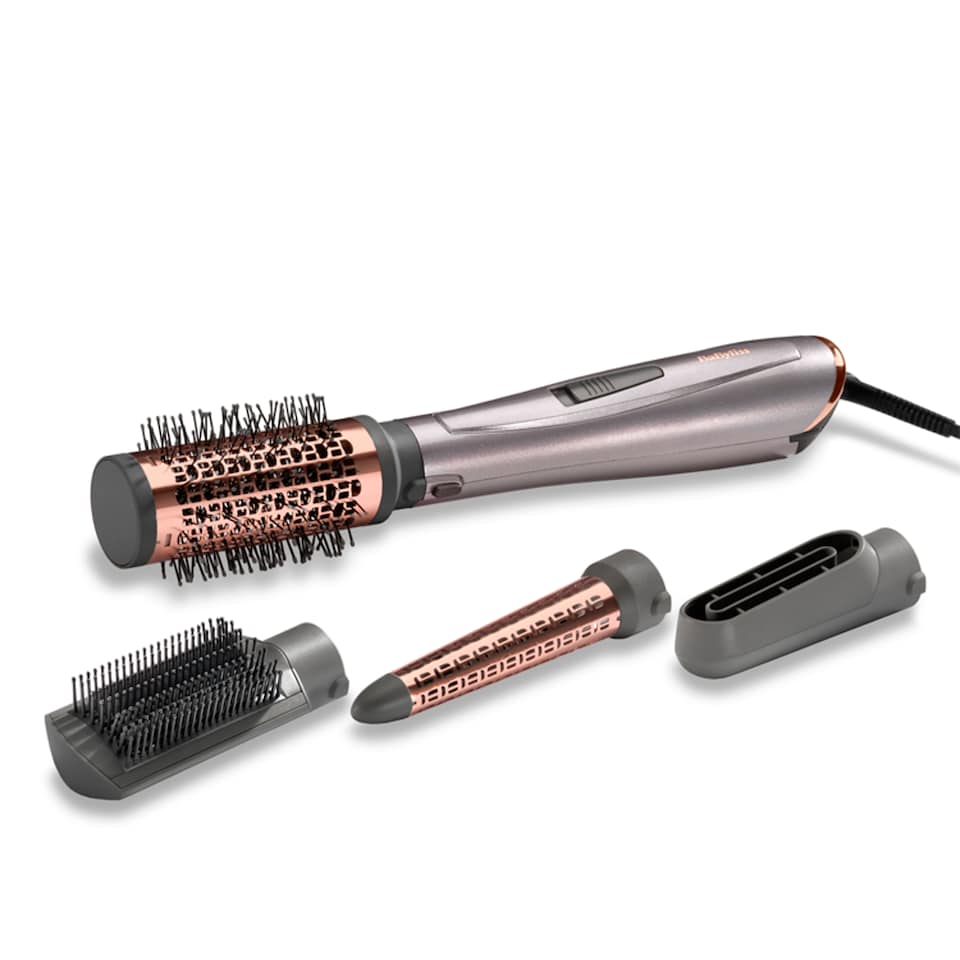
As an Amazon Associate we earn from qualifying purchases.
Verdict
A hot air brush works best on detangled, towel-dried or mostly pre-dried hair. Use small sections, start at the roots, move slowly through the lengths, shape the ends, and lock the result with cool air. Fussy, yes. Also the difference between a blowout and warm brushing.
Read next: Best hot air brush 2026, hot air brush for fine hair, and rotating hot air brush.
Step-by-step
- Detangle and apply heat protection.
- Pre-dry to around 70 to 80 percent.
- Divide hair into clean sections.
- Place the brush near the root.
- Move slowly through the lengths.
- Turn the ends in or out.
- Finish each section with cool air.
Preparation
Preparation matters more than most people expect. Detangle carefully before the brush touches your hair. Knots can pull around round brushes and make the tool feel harsher than it should. Use heat protection, but do not overload the roots with heavy creams or oils.
Your hair should not be dripping wet. A hot air brush can remove some moisture, but it is usually slower than a regular dryer. For thick or long hair, pre-dry first and use the brush mainly for shaping, root lift, and ends.
Section size
Smaller sections take longer, but they give a cleaner result. If the brush cannot grip the section evenly, only the outside hairs will style properly. Keep each section narrower than the brush head and thin enough for warm air to pass through.
Work from the lower sections upward and clip the rest out of the way. The crown and front pieces deserve the most attention because flat spots there are easiest to see.
Roots, lengths, and ends
For root volume, place the brush under the section and lift briefly before pulling through. For smoother lengths, move slowly and keep tension even. For shaped ends, turn the brush inward or outward at the bottom and hold for a few seconds.
Cool air is not just a comfort feature. It helps the warm shape set. This is especially important for fine hair, straight hair, and humid days.
Rotating or non-rotating?
Rotation reduces wrist work but needs more attention. If you are new to it, practice with small sections and stop immediately if you feel pulling.
Rotating brushes are useful for soft blowout shapes and rounded ends. Non-rotating brushes are often easier around the fringe, short layers, and roots. The better choice depends on the styling job, not only the price.
After styling
Let the hair cool before brushing it through. Use your fingers at the root instead of pressing the volume flat. If you use hairspray, keep it light and spray from a distance.
Clean the brush head regularly. Hair and product buildup reduce grip and can make heat feel less even.
Heat safety
Do not hold the brush in one place for too long. If your hair feels hot to the touch or starts to smell, stop and lower the setting. Damaged or bleached hair needs more caution than untreated hair.
Troubleshooting while styling
If a section gets tangled, stop the tool before pulling. Unwind gently in the opposite direction and take a smaller section next time. If the ends look frizzy, the hair may be too dry or the brush may be moving too fast. Add a little moisture, lower the heat, and slow down.
If the root is flat but the ends look good, change the order. Lift and cool the root first, then style the lengths. If the top layer looks puffy, use less product and smaller sections with steadier tension.
A hot air brush should make the routine easier, not more stressful. If you need many passes on the same section, pre-dry better or use a smaller section instead of increasing heat immediately.
Routine by hair length
For short hair and fringes, use small sections and short movements close to the root. For a bob, focus on the crown, side pieces, and shaped ends. Style the front pieces separately because they frame the face.
For long hair, do not expect the brush to be your only dryer. Pre-dry thoroughly, then use the brush for the visible lengths, the crown, and the ends. This reduces heat time and makes the finish more even.
When the result gets worse
If the brush slips, the section steams heavily, or the hair feels rough, the preparation or temperature is probably wrong. Hair that is too wet takes too long. Hair that is completely dry may not reshape easily. Slightly damp, almost dry hair is the best starting point.
Direction matters too. Turn the ends the same way for a calmer finish, or alternate directions for more movement. For everyday styling, it is often enough to style the front pieces and top layer carefully.
Common mistakes
- styling hair that is still too wet
- taking sections that are too wide
- skipping cool air
- forcing rotation in the wrong direction
- releasing each section before it cools
- ignoring product buildup on the brush
FAQ
Can it replace a dryer?
Partly. A dryer is faster for very wet or thick hair; the brush is better for shaping.
Why does my style not hold?
Usually the hair was too wet, the section was too large, or the shape was not cooled.
Can I use a hot air brush every day?
Yes, if your hair tolerates it and you use sensible heat. Dry or damaged hair may need lower settings and rest days.
Do I still need a regular dryer?
For very wet, thick, or long hair, yes. The brush is better for shaping than for fast full drying.
Can I use it on dry hair?
Mostly dry or lightly misted hair usually reshapes better than fully dry hair. Keep heat contact short when refreshing.
How do I avoid pulling?
Detangle first, use smaller sections, and do not wrap the hair too tightly around the brush.
What is the fastest weekday routine?
Refresh only the crown and front sections. Lightly mist them, lift the root in small sections, shape the visible ends, and let the hair cool before brushing. This gives most of the visible benefit without restyling the whole head.
Should I use styling product before or after?
Use heat protection before styling and finishing spray after the hair has cooled. Heavy creams before styling can make roots collapse.