As an Amazon Associate we earn from qualifying purchases.
Verdict
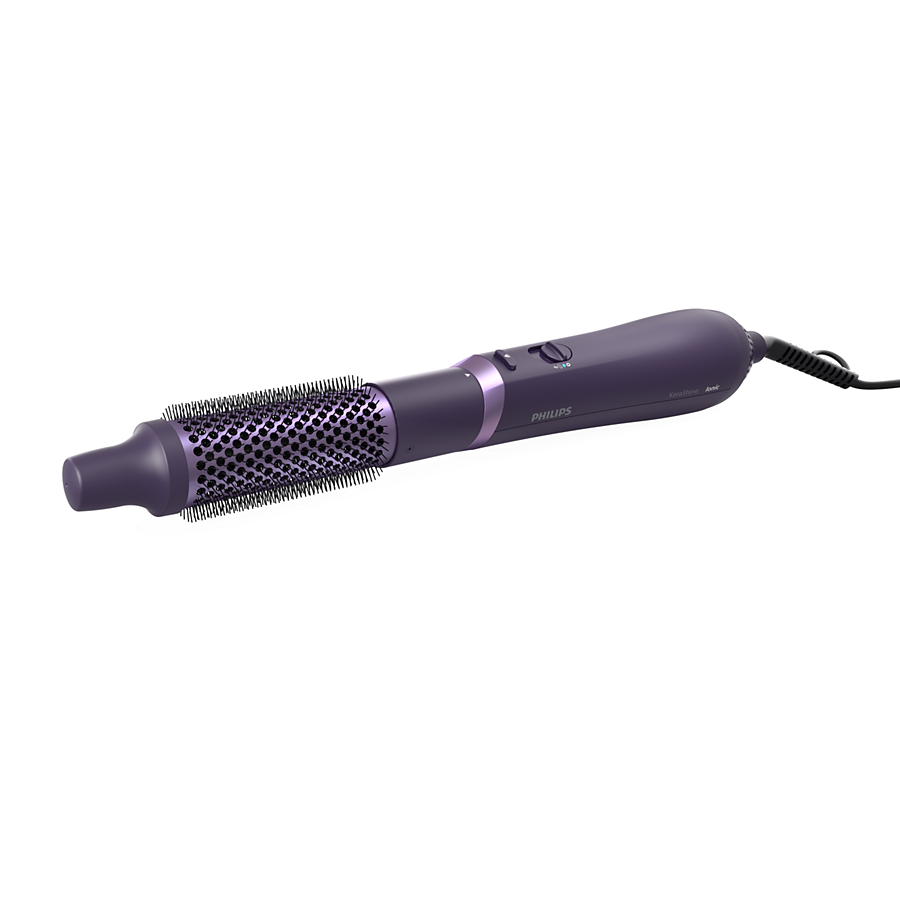
Fine hair needs control more than maximum heat. Choose moderate airflow, a brush that is not too large, cool air, and a light hand. The Philips Series 3000 BHA305/00 is a sensible first pick for fine hair because it supports everyday volume and a smoother finish without making the routine feel complicated.
Read next: Best hot air brush 2026, hot air brush root volume, and rotating hot air brush.
What matters for fine hair
Fine hair can collapse quickly if the brush is too large or the heat is too high. Work in smaller sections, lift the roots briefly, and finish with cool air.
The goal is not to turn fine hair into thick hair. A good hot air brush can lift the root, shape the ends, and make flyaways look calmer. The result depends more on sectioning and cooling than on attachment count.
Avoid heavy oils or rich leave-in creams at the roots before styling. They can make fine hair feel smooth for a few minutes, then flatten it. Use heat protection mainly through the lengths and apply root-lift product sparingly only where you need support.
Which type works best?
Non-rotating brushes give you more control while you learn. They are easier around the fringe, crown, and shorter layers. Rotating brushes can create a softer blowout finish, but they need smaller sections and hair that is already mostly dry.
Brush size matters. A large 50 mm head can be good for long hair, but it may smooth short or fine hair too flat. Small to medium attachments usually give better root control.
Recommendation framework
| Need | What to prioritize | Good pick |
|---|---|---|
| root lift | small sections and cool air | Philips Series 3000 BHA305/00 |
| smoother lengths | ionic care and moderate heat | Philips Series 3000 BHA305/00 |
| short layers | smaller barrels | BaByliss AS200E |
| rotating finish | pre-dry first | Rowenta CF9540 |
How to style for volume
Pre-dry first until the hair is only slightly damp. Divide the crown into narrow sections. Place the brush under the section at the root, lift gently, hold for a few seconds, then move slowly through the lengths.
Cool air helps the shape last. If your brush has a cool setting, use it before releasing the section. If it does not, pause briefly with the brush in place and let the section cool before touching it again.
Who should be careful?
If your hair is bleached, dry, or break-prone, avoid daily high-heat styling. Use lower settings, shorter contact time, and heat protection. A hot air brush can be gentler than a flat iron routine, but it is still a heated tool.
Very large oval brushes are not ideal for a short bob or fringe. They can smooth quickly, but they often do not give enough lift near the root.
Buying criteria for fine hair
A good hot air brush for fine hair does not need to be the most powerful model. Clear heat settings, a comfortable handle, and attachments that match your hair length matter more. If a brush only includes a very large head, it may be convenient for long lengths but too broad for root lift.
Weight also matters. Fine hair is often styled in smaller sections, so you hold the device longer than you would during a quick smoothing pass. A heavy handle can make you pull harder or rush the routine.
Cleaning is another practical detail. Fine hair and styling products can build up around the bristles quickly. Removable or easy-to-clean attachments make the brush more useful over time.
Better than a flat iron?
For everyday volume, a hot air brush can be the better choice. A flat iron compresses the lengths and often removes lift. A hot air brush smooths more softly and can raise the root while shaping the ends.
A flat iron is still better for a very sleek, polished finish. For natural-looking volume and less flatness, the hot air brush is usually more useful.
Routine by haircut
For a fringe, use the smallest suitable attachment and keep the movement short. Pulling the fringe straight down can make it look flat, so lift slightly at the root and curve only the ends. For a bob, focus on the top layer, side pieces, and the front sections that frame the face.
For shoulder-length hair, medium attachments usually give the best balance between control and speed. Long fine hair can use larger heads, but the roots still need smaller sections. If only the ends are styled, the whole look can still feel flat.
If your hair has light layers, style the shortest visible layers first. They create the impression of movement and make the rest of the hair look fuller without needing extra heat on every strand.
Common mistakes
- starting too wet
- using oversized barrels
- pulling the roots flat
- skipping cool air
- using heavy oils at the roots
- brushing the style out while it is still warm
- using sections that are too wide for the brush
FAQ
Is rotation good for fine hair?
It can be, but use small sections. Too much rotation can flatten the root.
What brush size is best?
For short to medium hair, 30 to 40 mm is often easier than 50 mm.
Why does my hair still look flat?
Usually the section was too large, the hair was too wet, or the root was pulled downward before it cooled.
Is ionic care required?
No. It can help with flyaways, but brush size, heat control, and cool air matter more.
Which heat setting should I use?
Start low and increase only if the section does not take shape. Fine hair rarely needs maximum heat.
What if my hair is very short?
Use smaller round attachments rather than a wide oval brush. They reach the root more easily and give better control around a fringe.
What is the most important beginner rule?
Start with hair that is mostly dry and let each section cool before touching it. Those two habits improve the result more than buying the most expensive brush.